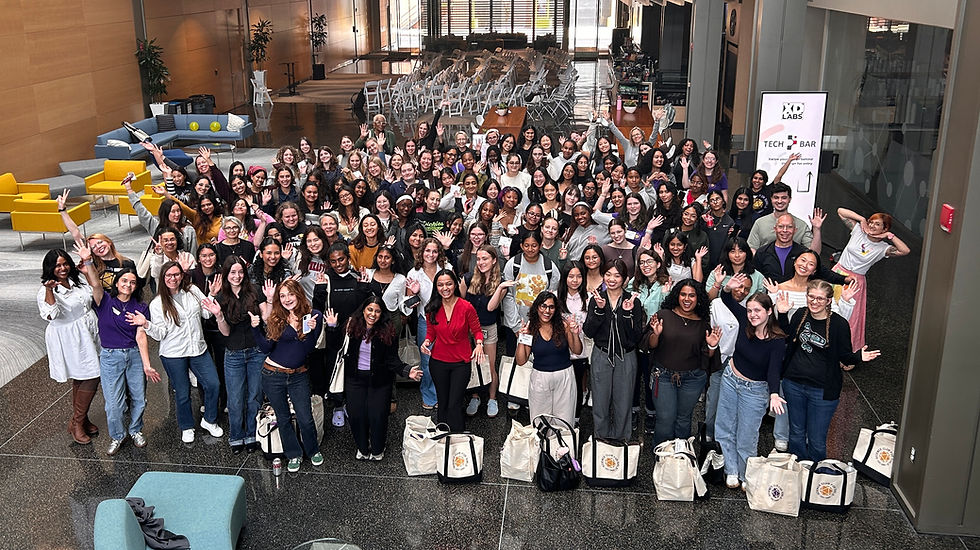
Curiosity in Action: Highlights from SCFG’s April Vacation AI & Robotics Club
Updated: May 29
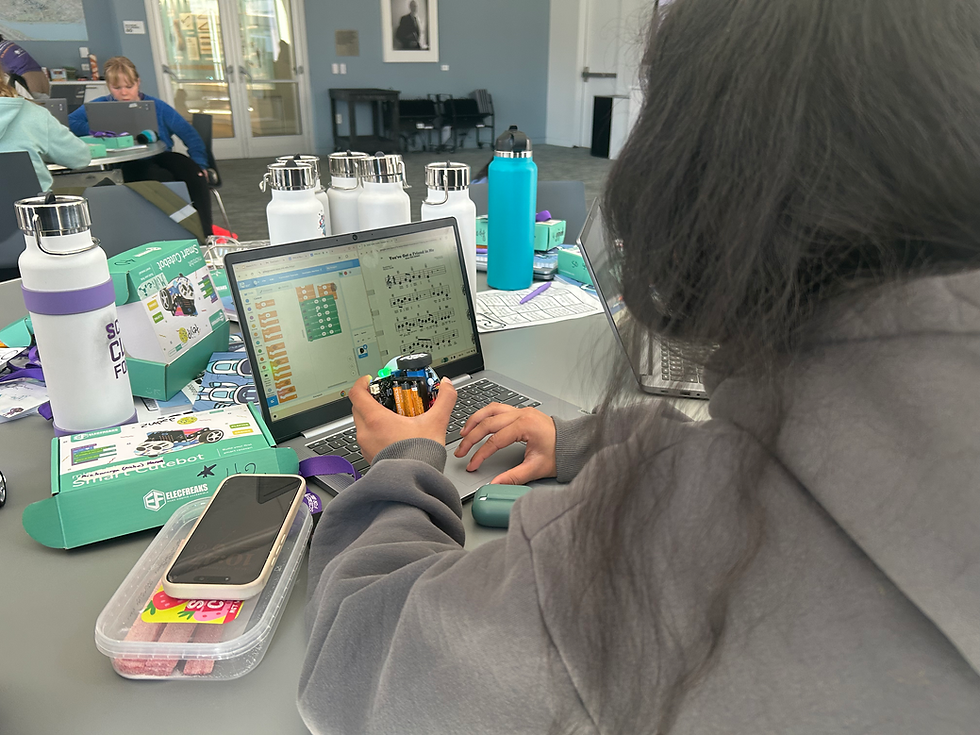
When students first walked into Science Club for Girls’ April Vacation Artificial Intelligence and Robotics Club, many arrived without knowledge of AI and Robotics. Others were shy. While even more were curious, but unsure if coding or robotics was “for them.” By the end of the week, the room looked completely different, participants huddled together troubleshooting code, cheering one another on during project demonstrations, and proudly showing off robots they had programmed themselves.
This year’s April Vacation AI and Robotics Club brought together 25 girls and gender-expansive youth for four days of hands-on learning at the MIT Museum. Throughout the week, participants explored coding, machine learning, robotics, and game design while building confidence in their own ability to solve problems and learn new skills. The program centered around a simple but very powerful message: technology can be challenging, but when we stay curious and work together to experiment, we can overcome obstacles and create something meaningful.
At the start of every day, participants began with games and icebreakers designed to build community and connection. Almost immediately, many discovered shared interests like favorite hobbies, pets, and music, helping transform a group of strangers into a supportive learning community. Those moments mattered. By fostering a welcoming environment, participants felt encouraged to ask questions, collaborate with peers, and support one another. This spirit of collaboration became a key foundation for the week’s success.

On the first day, they were introduced to cutebots, programmable robots that quickly became the highlight of the week. After our Program Managers demonstrated a few simple interactions between cutebots and the computer program, like changing colors and basic movement, participants immediately began experimenting on their own. Within minutes, the room lit up with flashing lights and spinning robots programmed by the students themselves
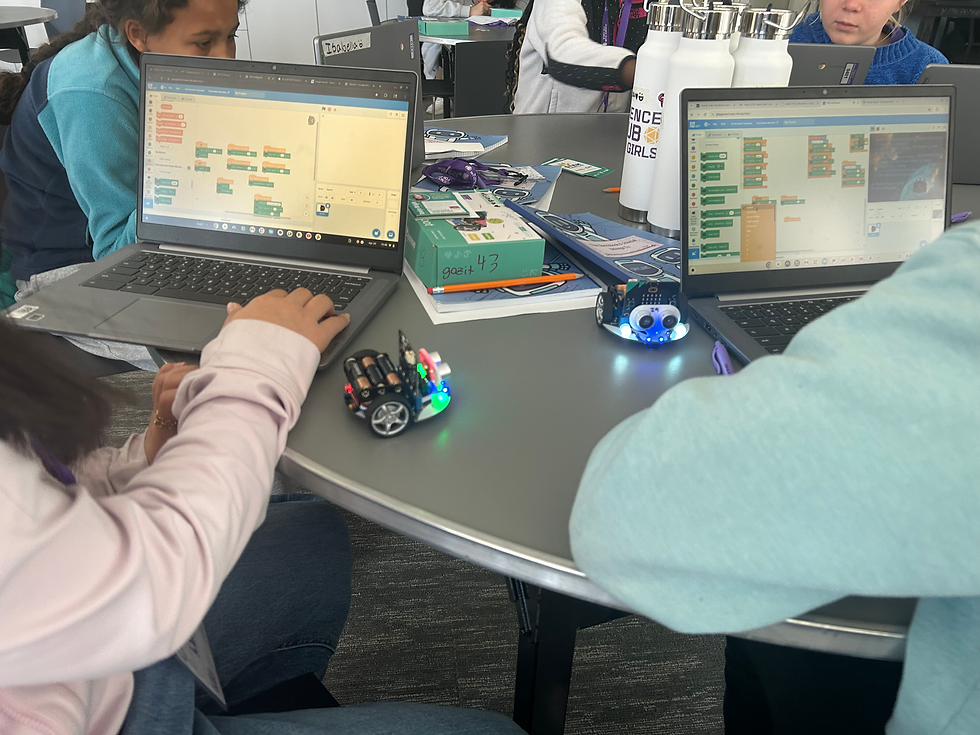
What was integral was that students were not given strict instructions on what to create. Instead, they were encouraged to explore. That freedom transformed curiosity into experimentation. Some students programmed their robots to zoom in circles, while others focused on sounds, colorful light patterns, or creative movements. Furthermore, participants moved across the room to share ideas and help new friends troubleshoot programming. The excitement in the room grew as students realized they could control and customize the robots through code.
Building on this hands-on experience, we then explored the foundations of algorithms and machine learning. Using Google’s Teachable Machine, participants trained computer models to distinguish between images such as cats and dogs. For many students, this was their first introduction to artificial intelligence and how computers learn from data to make decisions. Watching the computer gradually improve its predictions helped students understand that AI is built through human-designed systems and iterative testing.

As participants continued exploring the possibilities of artificial intelligence and robotics, this spirit of collaborative experimentation remained central to the experience. Through the confidence they gained through teamwork and experimentation, students continued developing games and interactive projects using Scratch. Our Program Managers guided activities like “Make It Fly,” where participants learned how coding instructions influence movement and animation of characters.
Afterward, participants moved beyond the tutorial basics to customize their projects with original ideas and continue experimenting independently. As they built out their work, they collaborated closely with Program Managers and peers to test ideas, debug code, and troubleshoot challenges along the way. As the activity pushed students to think critically and work through unfamiliar problems, it also reinforced one of the program’s most important lessons: STEM is collaborative. Problem-solving rarely happens alone; for our young participants, learning to ask for help, share ideas, and then work through challenges together is just as valuable as developing technical skills.

In addition to hands-on learning opportunities, participants also took an AI exhibit tour at the MIT Museum that expanded their understanding of how artificial intelligence is shaping everyday life. From image recognition to smart devices, they explored real-world applications of AI while discussing both the opportunities and responsibilities that come with emerging technologies. Experiences like these help young people connect what they are learning in the classroom to the real world, while also encouraging them to imagine themselves as future innovators within STEM fields.
 | 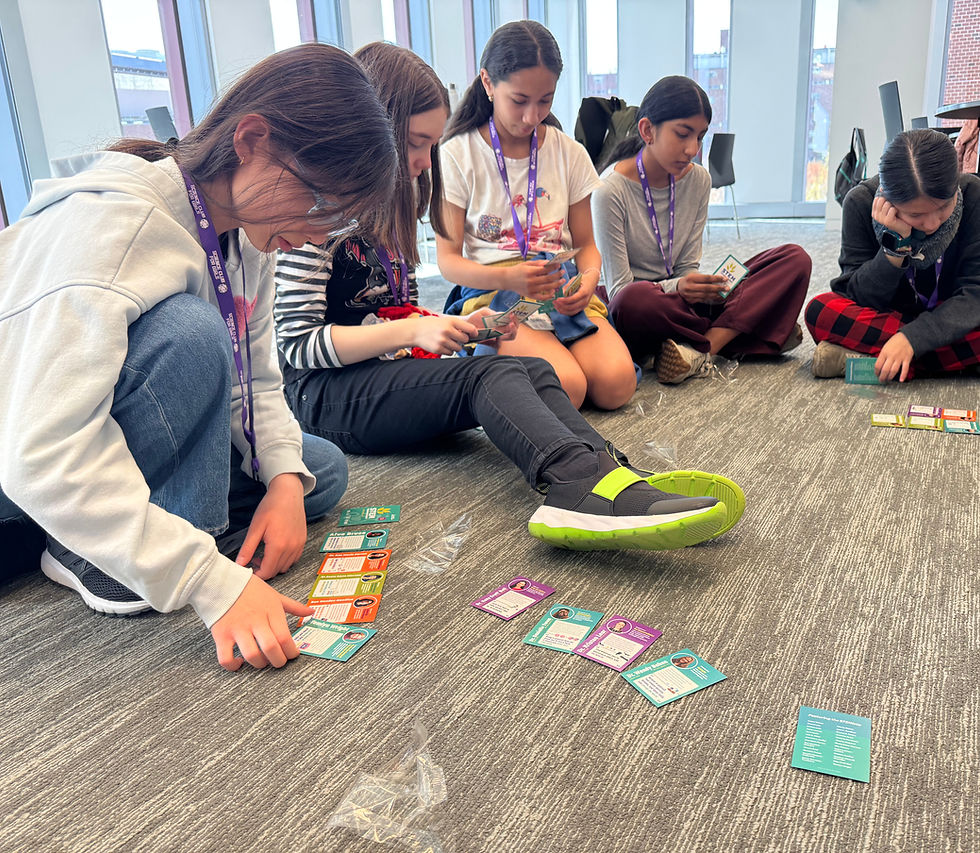 |
Building on this idea of helping participants envision their own futures in STEM, the program also incorporated IF/THEN® STEM Trading Cards, made possible through a grant from IF/THEN®, an initiative of Lyda Hill Philanthropies. The cards highlight women innovators across science, technology, engineering, and mathematics and are designed to inspire girls to envision themselves in STEM careers. Through this activity, participants then created trading cards of themselves, reflecting on their passions and imagining their future pathways. Giving young people opportunities to dream about their futures helps build motivation and a stronger sense of possibility, especially when they can see role models whose experiences and achievements feel representative.

By the final day, students had transformed into more confident creators. They spent the morning refining their Scratch games and programming their cutebots for the exhibition showcase. The once uncertain participants who walked into the room on Tuesday left as innovators ready to continue exploring the world of STEM.
Science Club for Girls’ April Vacation Artificial Intelligence and Robotics Club introduces girls and gender-expansive youth to the fundamentals of AI and robotics, but the week’s deeper purpose is to open the door to possibility. Through the encouragement from both peers and mentors, students came to understand that their ideas matter and their capability of shaping what comes next.
Thank you to the funders who supported the 2026 AI/Robotics Club, including the Cabot Family Charitable Trust, IF/THEN®, an initiative of Lyda Hill Philanthropies, and Laboratory Robotics Interest Group, New England.