
Investing in our Mentors: Recapping Our Inaugural Mentor Conference
On Saturday, September 19, Science Club for Girls brought our Mentors and Junior Mentors together in Kendall Square for our inaugural Mentor Conference. It was a full day of training, networking and professional development. Every session was designed to build the leadership and science communication skills that power our programs for girls and gender-expansive youth.
But the day wasn't only about our Clubs. It was also about our Mentors themselves: a chance to build community with peers at every stage of their STEM journeys and to invest in their own professional growth.
Every week, our Mentors show up for our Science Clubs and our participants. This Mentor Conference was about showing up for them, too.
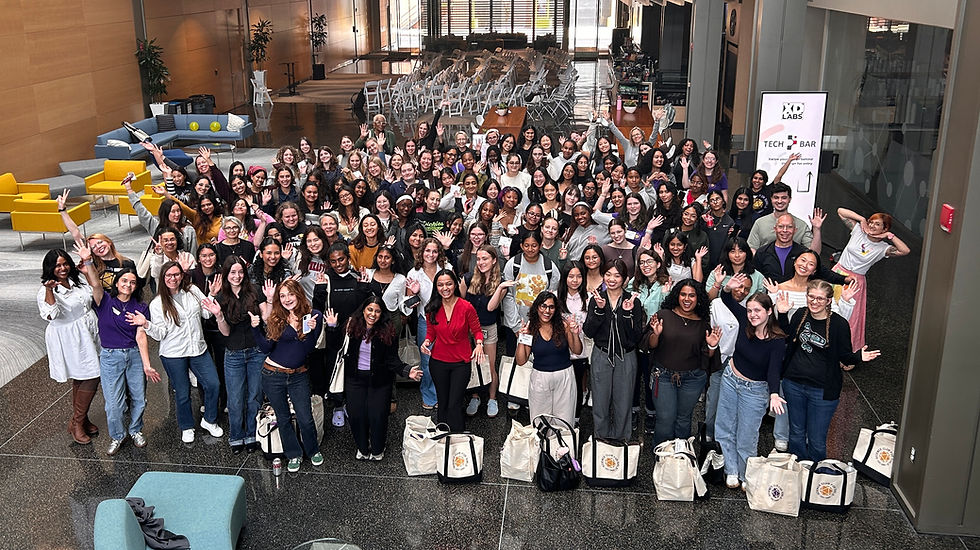
Investing in the Mentors Behind Our Clubs

Every Science Club depends on our Mentors. They guide our participants through hands-on, inquiry-based experiments. They show our participants that mistakes and experiments that go wrong are a normal part of discovery. And they model the curiosity, leadership, and communication skills we hope every participant takes with them.
"Science Club for Girls' Mentors and Junior Mentors are not simply part of our model, they are the heart of it," said Executive Director Bonnie Bertolaet. "Mentors are crucial for instilling a sense of confidence and belonging in young girls that is key to their decision to stay in STEM. This conference is an investment in the people who make that transformation possible."
Our Mentors spend their time helping young people feel they belong in STEM. Yet many of them are still searching for that same sense of belonging in their own classrooms, labs, and workplaces. Our Mentors are also on their own STEM journeys, and those journeys aren't always easy. Nearly half of women leave the STEM workforce within five years. Fewer than one-third of women with STEM degrees are still working in STEM by age thirty. Here in Massachusetts, women hold just 26% of computing jobs and 15% of engineering and architecture jobs.
We talk a lot about keeping young students excited about STEM, but the challenge doesn't stop at graduation. Women face barriers at every stage of their STEM careers, and having a community behind them can make all the difference. The Mentor Conference brings together people at every point along the way, from high school Junior Mentors to postdocs and working professionals, so they can learn from and lift up one another. That is how we support the whole journey, from the kindergartners in our Science Clubs to the professionals building STEM careers right now.

A Full Circle Keynote

One highlight of the day was a keynote from Board Member and Mentor, Kaitlyn Webster, PhD, a Postdoctoral Fellow at Harvard. She talked about her path into science and the mentors who shaped it. For Kaitlyn, that path started close to home.
“The mission of Science Club for Girls is deeply personal to me, because I know first-hand how much of an impact these programs can have. I always tell people that I never would have grown up to be a scientist if not for the free, hands-on STEM outreach programs I participated in as a kid in Cambridge,” she shared. “I now get to pay forward the investment made in me by serving as a Mentor myself, and at every Club I strive to be the grown-up who makes students feel seen, welcomed, and excited about STEM.”
Stories like Kaitlyn's are why the Mentor Conference matters. When we invest in our Mentors, we're investing in the leaders they are today and in every young scientist they'll inspire for years to come. Our first Mentor Conference was just the beginning, and we're excited to watch this community keep growing!
We're also deeply grateful to the Founding Sponsors who made our first Mentor Conference possible! Thank you for investing in our Mentors and in a more equitable future for STEM.
Presenting Sponsor:

Momentum Sponsors:


Community Sponsor: Beam Therapeutics
Grassroots Sponsors: Massachusetts Health Council and Operation-All
Want to support our kindergarten through the career continuum? |


